
Is Villora worth it, in plain terms?
In plain terms, Villora is worth it for convenience and not for quantity: you pay for a tidy daily capsule that combines fibers and a probiotic, not for a large fiber dose. Whether that trade suits you depends on why you are buying.
Think of it as two questions. First, would you actually keep up a daily fiber habit if it meant mixing a powder? If not, a capsule you will take beats a powder you will not. Second, do you need a specific amount of fiber or a specific probiotic strain? If yes, Villora's label cannot give you those numbers, and its value drops.
We are an independent information site, and we may earn from order links. Our view of value is built from the label, the sales page and public health guidance. Our full Villora review gives the wider verdict.
Villora pros and cons
Villora's main pros are convenience, a clear ingredient list and a 60-day guarantee, and its main cons are the small blend, the hidden per-item amounts, the missing strain code and the tree-nut content. Here they are side by side.
| Pros | Cons |
|---|---|
| One capsule a day; no scoops or mixing | 695 mg blend is a small amount of fiber |
| Seven food-based fiber sources plus a probiotic | No per-item milligrams on the panel |
| 1.5 billion CFU printed, guaranteed at manufacture | Strain code shown only as a STRAIN ID placeholder |
| Front label says Non-GMO and Vegan | Contains tree nuts (black walnut hull) |
| One-time purchase; no subscription mentioned | No studies on the finished product that we have seen |
| Free US shipping on 4 and 6 bottle packs | $9.99 shipping on the 2 bottle pack |
| 60-day money-back guarantee | Buyer pays return shipping |
Some cons matter more than others. The tree-nut content is a hard stop for anyone with a walnut allergy. The dose and strain gaps matter most if you care about measured amounts. The shipping and return costs matter most on the smallest pack.
What Villora costs per day
Villora costs about $1.63 a day on the 6 bottle pack, about $1.97 on the 4 bottle pack and $2.30 on the 2 bottle pack, which rises to $2.47 with its shipping.1 One bottle is 30 capsules, so one bottle covers about 30 days.
| Pack | Total | Days covered | Shipping | Cost per day |
|---|---|---|---|---|
| 2 bottles | $138 | 60 | $9.99 | $2.30, or $2.47 with shipping |
| 4 bottles | $236 | 120 | Free (US) | About $1.97 |
| 6 bottles | $294 | 180 | Free (US) | About $1.63 |
The larger packs lower the daily cost but raise the upfront spend and the commitment. The 60-day guarantee runs from the purchase date, so with a 6 bottle pack you would be deciding long before you finish the supply. The sales page says two digital guides come with the 4 and 6 bottle packs. Our Villora price page compares the packs in more detail.
Villora versus plain fiber: value per day
Measured by fiber per dollar, plain fiber foods and simple fiber powders give far more than Villora, because one Villora capsule holds a 695 mg blend while a fiber-rich diet aims for many grams a day. The capsule competes on convenience, not on amount.
The Dietary Guidelines for Americans set a fiber goal of 14 grams per 1,000 calories.2 At a typical adult calorie intake, that is well above 20 grams a day. Villora's blend is under one gram in total, and part of that weight is walnut hull, plum powder and the probiotic. So even a full bottle adds only a modest share of a single day's goal across a whole month.
By contrast, foods such as beans, lentils, oats, whole grains, fruit and vegetables can supply several grams per serving, and MedlinePlus lists many everyday high-fiber options.3 A plain psyllium powder can also give several grams per scoop. Harvard's Nutrition Source notes that fiber from whole foods comes with other nutrients as well.4 Our Villora vs psyllium powder page compares the capsule and powder formats directly.
Whichever form you choose, add fiber gradually, drink plenty of water and follow the label. Gel-forming fibers such as psyllium, konjac and pectin swell with liquid.
Fiber gap meter
How much of a day's fiber goal can one capsule cover? The goal uses the Dietary Guidelines figure of 14 g per 1,000 calories.
Does the probiotic add value?
The probiotic adds some value as a two-in-one convenience, but less than a probiotic product that names its strain, because research on probiotics is tied to specific strains. Villora names only the species.
The panel lists Lactobacillus acidophilus at 1.5 billion CFU, guaranteed at time of manufacture, with a STRAIN ID placeholder where a strain code would be.5 NIH explains that different strains can have different effects, so findings for one strain do not carry over to another.6 NCCIH adds that while probiotics are widely used, much is still unknown about which ones help and for whom.7
So if the probiotic is the main reason you are interested, a product with a named strain may give you more to judge. If you simply like having fiber and a probiotic in one step, the bundle is the value. Our Villora vs probiotic capsules page goes into the CFU and strain question.
Who gets the most value from Villora?
The people most likely to get value from Villora are healthy adults with no nut allergy who already eat reasonably well and want a simple daily add-on they will actually keep up. The people least likely to get value want measured doses or big changes.
Likely to see value
- Adults who dislike powders and prefer one capsule.
- People who travel often and want something easy to pack.
- Buyers comfortable with a small, plain add-on to a varied diet.
- Anyone who likes a one-time purchase with a 60-day window to decide.
Unlikely to see value
- Anyone with a tree-nut or walnut allergy, who should not take it at all.
- People who need a set number of grams of fiber each day.
- Buyers who want a named probiotic strain.
- Anyone expecting the ad story of sweep, cleanse, repair to happen.
If you are pregnant, nursing, take medicines or have a digestive condition, trouble swallowing or a past bowel blockage, ask a doctor or pharmacist before deciding. Fiber can change how some medicines are absorbed. See who should take Villora for a fuller fit check.
How to judge Villora's value for yourself
Judge Villora's value by setting a clear purpose, choosing a pack that fits the 60-day guarantee window and keeping simple notes on how the routine fits your day. That keeps the decision grounded in your own experience rather than ads.
- Write down why you want it: convenience, habit, or both.
- Check the label for allergens and ask a professional if any caution applies.
- Choose a pack. Smaller costs more per day; larger costs more upfront.
- Mark the 60-day guarantee date counted from purchase.
- Take one capsule daily with a meal and a full glass of water.
- Keep a short note of your meals, water and comfort, without expecting a set timeline.
- Decide before the guarantee date whether to keep going.
If you notice gas or bloating at first, that can happen with fiber and probiotics. Stop and get urgent help for chest pain, vomiting, or trouble swallowing or breathing.
Our bottom line on Villora's value
Our bottom line is that Villora is fair value for convenience, weak value for fiber quantity and no value for anyone with a tree-nut allergy. It is a small daily habit product, priced like one.
We saw no studies on the finished Villora product, and the blend hides per-item amounts. Those facts set a ceiling on what we can say. We would rather tell you that plainly than dress the product up, because a buyer with honest expectations is far less likely to feel let down a month later. Within that ceiling, a buyer who wants an easy capsule, eats a varied diet and reads the label first can make a sensible choice. If that sounds like you, check the current Villora offer and confirm the live price before you pay.
Ready to order? Compare the three Villora packs
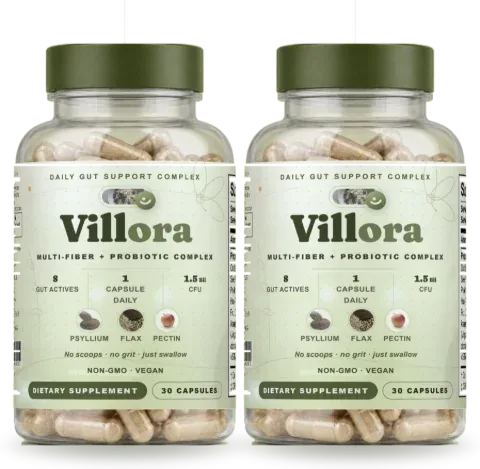
2 bottles
$69per bottle
- $138 total · 60 capsules
- $9.99 shipping
- $2.47 a day with shipping
- Good for trying the routine first
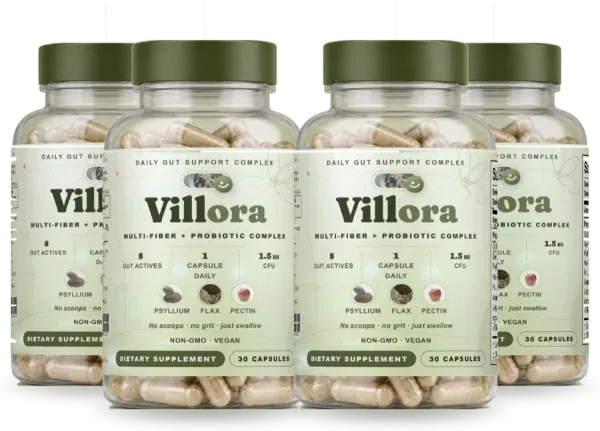
4 bottles
$59per bottle
- $236 total · 120 capsules
- Free US shipping
- about $1.97 a day
- Two digital guides included (sales page)
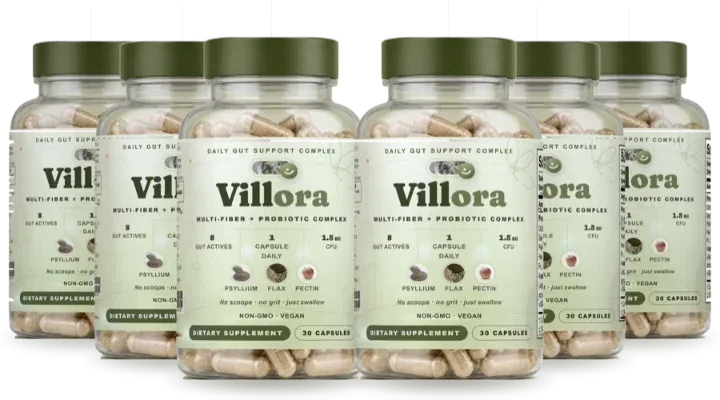
6 bottles
$49per bottle
- $294 total · 180 capsules
- Free US shipping
- about $1.63 a day
- Two digital guides included (sales page)

60-day money-back guarantee from the purchase date, per the sales page. Return the bottles, even empty, with tracking. Buyer pays return shipping. Questions: +1 (302) 200-3480 or [email protected].

Order links go to the official checkout through our checkout guide rules: check the address bar, the total and the shipping line before you pay. Tree-nut allergy? Do not order: the blend lists black walnut hull.
Questions people ask
Is the 6 bottle Villora pack better value than the 4 bottle pack?
Per day, yes: about $1.63 versus about $1.97. But the 6 bottle pack costs $294 upfront, and the 60-day guarantee runs from purchase, so you decide well before the supply runs out.
Is Villora cheaper than getting fiber from food?
Not per gram of fiber. A single 695 mg capsule holds far less fiber than everyday foods such as beans, oats or fruit. Villora's appeal is convenience rather than fiber per dollar.
What is the biggest drawback of Villora?
For most buyers it is the small, undisclosed dose: a 695 mg blend with no per-item amounts. For anyone with a tree-nut allergy, the black walnut hull content rules it out entirely.
Do the Villora digital guides change its value?
The sales page says two digital guides come with the 4 and 6 bottle packs. We do not give them a dollar value, so judge the packs mainly on cost per day and supply.
Is Villora worth it for someone on daily medicine?
Ask your pharmacist first. Fiber can change how some medicines are absorbed, so spacing may be needed. Value only matters once you know it is suitable for you.
Sources for this page
- Villora official sales page, read 23 November 2026 (prices, shipping and guarantee terms)
- Dietary Guidelines for Americans
- MedlinePlus — High-fiber foods
- Harvard T.H. Chan School of Public Health — The Nutrition Source: Fiber
- Villora bottle front label and Supplement Facts panel (photographed on this site)
- NIH Office of Dietary Supplements — Probiotics fact sheet
- NCCIH — Probiotics: What You Need To Know