
Does Villora have side effects?
Yes, it can, like any product that adds fiber and live bacteria to your day. The label lists seven plant powders and one probiotic in a 695 mg proprietary blend, taken as one capsule daily.1 Most of those powders are fibers, and fiber is well known for causing gas and bloating when someone adds it to their routine.2 Probiotics can do the same at first.3
We have not seen any study on the finished Villora product, so nobody can give exact rates for how often each effect happens. What we can do is explain what the label contents are known for in general, and point you to the official sources we used. If you want the full list of items first, read our page on Villora ingredients.
Common effects: gas, bloating and stomach discomfort
Gas, bloating and mild stomach discomfort are the effects people are most likely to notice. MedlinePlus explains that adding a lot of fiber too quickly can cause intestinal gas, bloating and cramping, and that these often settle as the body adjusts.2 It also advises adding fiber gradually and drinking plenty of fluids.2
NCCIH notes that the most common reported effects of probiotics in healthy people are mild digestive symptoms such as gas.3 Villora's probiotic is Lactobacillus acidophilus at 1.5 billion CFU, guaranteed at the time of manufacture.1
| Label item | General type | Effect most often linked |
|---|---|---|
| Oat bran powder | Grain fiber | Gas or fullness when fiber is new |
| Flax seed powder | Seed fiber | Gas or bloating when fiber is new |
| Psyllium husk powder | Gel-forming fiber | Gas; swells with liquid |
| Apple pectin powder | Gel-forming fiber | Gas; swells with liquid |
| Konjac root powder | Gel-forming fiber | Swells strongly with liquid |
| Black walnut hull powder | Walnut plant part | Allergy risk for tree-nut allergy |
| Plum powder | Fruit powder | Listed near the end; amount not given |
| Lactobacillus acidophilus | Probiotic | Mild gas at first |
The table describes the general types, not measured results from Villora. The panel does not give the amount of each item, so we cannot say which one, if any, would cause an effect for you.1
How big is the fiber dose?
The whole blend is 695 mg per capsule, and that figure includes the probiotic and the walnut hull, so it is not 695 mg of fiber.1 For scale, the Dietary Guidelines for Americans set a fiber goal of 14 g per 1,000 calories.5 One capsule is a small amount next to that goal. That is one reason we expect any fiber effects to be mild for most people, though we cannot promise it, and people who are sensitive to fiber may still notice a change.
If you are also raising fiber from food at the same time, the combined change is what your gut feels. Making one change at a time makes it easier to tell what suits you.
Is Villora bloating normal?
Some mild bloating in the first days is a common response to new fiber, and it is usually temporary.2 That said, "common" does not mean you have to put up with it. Your body is the best guide.
- Take the capsule with a meal and a full glass of water, as the sales page directs.4
- Drink fluids through the day, which MedlinePlus pairs with any fiber increase.2
- Keep other changes small, so you can tell what is causing what.
- Stop taking it if bloating is strong, painful, or does not settle.
- Ask a doctor if stomach symptoms keep coming back, whether or not you take a supplement.
Our how to take Villora page walks through the daily routine in more detail, including what to do if you miss a capsule.
The walnut and tree-nut allergy risk
Anyone allergic to walnut or other tree nuts should not take Villora. The sales page states it contains tree nuts (walnut), and Black Walnut Hull Powder is the sixth item in the blend.41 A hull is the outer covering of the nut, but it still comes from the walnut plant.
The FDA lists tree nuts among the major food allergens in the United States.6 FARE explains that tree-nut reactions can be severe, and that people allergic to one tree nut are often told to be careful with others.7 The Drugs.com monograph on black walnut also notes that cross-reactivity among tree nuts is possible.8
Allergy signs can include hives, itching, swelling of the lips or face, stomach pain, vomiting, wheezing or trouble breathing.9 A severe reaction is an emergency. Our Villora walnut allergy page covers label reading and cross-reactivity in depth.
Why water matters with gel-forming fibers
Psyllium, konjac and pectin are gel-forming fibers, which means they swell when they meet liquid, so Villora should always go down with a full glass of water.14 Taking a swelling fiber with too little liquid raises the risk of it getting stuck in the throat or chest.
This is a recognized concern. US rules require a choking warning on over-the-counter drug products made with water-soluble gums such as psyllium and glucomannan, which comes from konjac.10 Villora is a dietary supplement, not one of those drug products, but the same physical behavior of the fiber applies.
- Sit or stand upright when you swallow the capsule.
- Drink a full glass of water with it, not a sip.
- Take it with a meal, as the sales page directs.4
- Do not take it right before lying down.
- Skip it and ask a doctor if you have any trouble swallowing.
When to stop and get urgent help
Stop taking Villora and get urgent medical help if you have chest pain, vomiting, or trouble swallowing or breathing after taking it. These are the warning signs tied to swelling fibers, and they need care right away, not a wait-and-see approach.
Get emergency help now for chest pain, vomiting, trouble swallowing or trouble breathing after a dose, or for signs of a severe allergic reaction such as swelling of the face or throat. In the US, call 911.
For effects that are not urgent but worry you, stop the product and talk to a doctor or pharmacist. Bring the bottle so they can read the Supplement Facts panel themselves. Severe or lasting belly pain, blood in the stool, or a big change in bowel habits are reasons to see a doctor regardless of any supplement.
Who is more likely to have problems
Some people face a higher chance of problems and should ask a doctor or pharmacist before trying Villora. Based on the fact sheet for this product, that includes anyone who:
- is pregnant or nursing (some references advise avoiding black walnut preparations in pregnancy)8
- takes any medicine, because fiber can change how some medicines are absorbed
- has trouble swallowing
- has had a bowel blockage or narrowing
- has a digestive condition
- has a weakened immune system or a serious illness3
Villora is meant for adults 18 and over.4 NCCIH notes that people with serious illness or weakened immune systems have had rare serious problems with probiotics.3 For medicines in particular, see our page on Villora and medications.
How to report a side effect
You can report a side effect from Villora to the FDA through its MedWatch program, which accepts reports from consumers as well as health professionals.11 Reports help the FDA spot problems with products on the market.
The FDA does not approve dietary supplements before they are sold, and it relies partly on these reports after a product is on shelves.12 It is also worth telling your doctor, and contacting the seller so they have a record.
- Keep the bottle and note the lot number if one is printed.
- Write down when you took it, what happened and when.
- Report to the FDA through MedWatch.11
- Tell the seller by phone at +1 (302) 200-3480 or by email at [email protected].4
If you decide the product is not for you, the sales page describes a 60-day money-back guarantee; our Villora refund page explains the steps.
Ready to order? Compare the three Villora packs
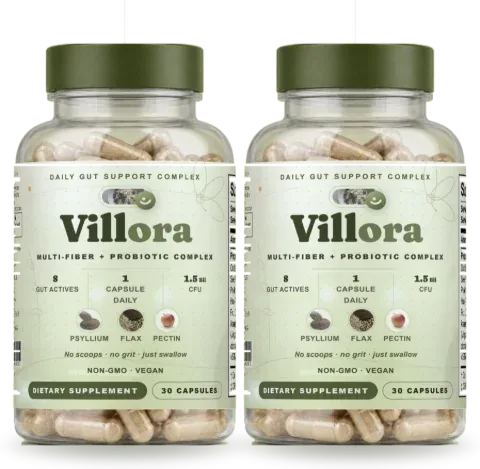
2 bottles
$69per bottle
- $138 total · 60 capsules
- $9.99 shipping
- $2.47 a day with shipping
- Good for trying the routine first

4 bottles
$59per bottle
- $236 total · 120 capsules
- Free US shipping
- about $1.97 a day
- Two digital guides included (sales page)
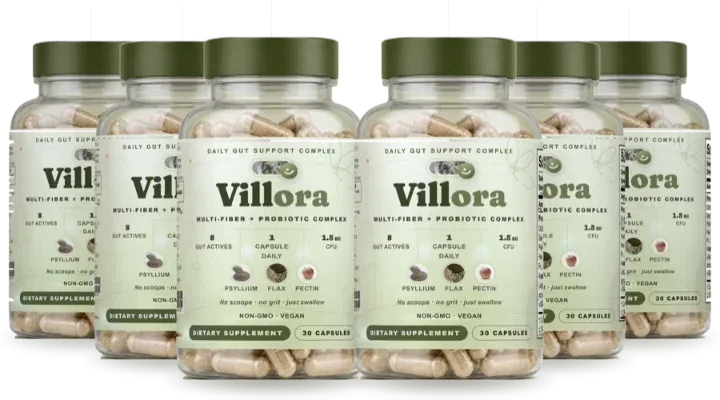
6 bottles
$49per bottle
- $294 total · 180 capsules
- Free US shipping
- about $1.63 a day
- Two digital guides included (sales page)

60-day money-back guarantee from the purchase date, per the sales page. Return the bottles, even empty, with tracking. Buyer pays return shipping. Questions: +1 (302) 200-3480 or [email protected].

Order links go to the official checkout through our checkout guide rules: check the address bar, the total and the shipping line before you pay. Tree-nut allergy? Do not order: the blend lists black walnut hull.
Questions people ask
Can Villora make me gassy in the first week?
It can. Gas is one of the most common effects when fiber is added to a routine, and probiotics can cause mild gas at first. It often settles as your body adjusts. Stop if it is strong or does not settle.
Does Villora cause diarrhea or loose stools?
Changes in stool are possible whenever fiber is added, but we have no Villora-specific data on how often any change happens. The label does not list diarrhea as an expected effect, and neither does the sales page. If loose stools last or are severe, stop and ask a doctor.
Is black walnut hull in Villora a problem if I only react to almonds?
Ask an allergist before taking it. Cross-reactivity among tree nuts is possible, and people with one tree-nut allergy are often told to be careful with others. Do not test it on your own.
What should I do if a Villora capsule feels stuck?
Get urgent medical help if you have chest pain, vomiting or trouble swallowing or breathing. Do not try to wash it down with more capsules or wait it out. Later, tell your doctor and report it to the FDA through MedWatch.
Can I report a Villora reaction without a doctor?
Yes. The FDA's MedWatch program takes reports directly from consumers. Have the bottle, the dates and a short description of what happened ready when you file.
Sources for this page
- Villora bottle front label and Supplement Facts panel (photographed on this site)
- MedlinePlus — Fiber (encyclopedia)
- NCCIH — Probiotics: What You Need To Know
- Villora official sales page, read 23 November 2026 (prices, shipping and guarantee terms)
- Dietary Guidelines for Americans
- FDA — Food Allergies
- FARE — Tree nut allergy
- Drugs.com — Black walnut (natural product monograph)
- MedlinePlus — Food Allergy
- FDA eCFR 21 CFR 201.319 — water-soluble gums warning
- FDA — MedWatch adverse event reporting
- FDA — Dietary Supplements