
Does Villora contain nuts?
Yes. Villora contains black walnut, a tree nut. The panel lists "Black Walnut Hull Powder (Juglans nigra) hull" as the sixth of eight items in the 695 mg proprietary blend, and the sales page says the product contains tree nuts.1
The front label does not carry a large nut warning, so the walnut is easy to miss if you only read the front. That is why we flag it on every page where taking Villora comes up. It is not a trace or a possible cross-contact. It is a listed ingredient.
Do not take Villora if you have a walnut or tree-nut allergy, or if a clinician has told you to avoid tree nuts. Keep the bottle out of reach of anyone in your home who has a nut allergy.
This also matters for people who buy for a partner or a parent. If you are ordering for someone else, check their allergy history first. A capsule looks harmless, and the person taking it may not think to read the back of a bottle someone else bought.
- Ingredient: black walnut hull powder, Juglans nigra.1
- Seller statement: contains tree nuts.
- Amount: not disclosed, part of a 695 mg blend.
- Who must not take it: anyone with a walnut or tree-nut allergy.
- Who should ask first: anyone with any nut allergy history.
MedlinePlus notes that the only sure way to avoid a food allergy reaction is to avoid the food that causes it.2 For a tree-nut allergy, that includes supplements that list a tree nut.
Where is the walnut on the Villora label?
The walnut is on the Supplement Facts panel, sixth in the blend list, between konjac root and plum powder.1 Because items in a blend are listed by weight from most to least, black walnut hull is present in a smaller amount than the first five items.3 The exact milligrams are not disclosed.
| Label detail | What is printed | What it means for allergy |
|---|---|---|
| Ingredient name | Black Walnut Hull Powder | Walnut is present |
| Botanical name | Juglans nigra | Black walnut species |
| Plant part | hull | Outer covering of the nut |
| Position in blend | 6th of 8 | Smaller share, amount not given |
| Sales page statement | Contains tree nuts | Handle as a nut-containing product |
If you are checking for someone else, show them this line on the bottle itself. Our Villora label page walks through every line on the panel.
Does a walnut hull count as a tree nut?
Yes, for allergy purposes you should count it. The hull is the outer covering of the black walnut, and the seller itself says the product contains tree nuts.1 There is no label statement that the hull has been processed to remove allergens, and we would not rely on that even if there were.
FARE, a food allergy group, advises people with tree-nut allergies to avoid tree nuts and to read labels for every product, because tree nuts can appear in unexpected foods and products.4 A dietary supplement is one of those places. Plant names in Latin, like Juglans nigra, can hide a familiar food behind a less familiar word.
- "Juglans" is the walnut genus.
- "Hull" is part of the walnut fruit, not a separate plant.
- The sales page statement removes any doubt: it contains tree nuts.
- A small amount in a blend is still an exposure.
What is cross-reactivity among tree nuts?
Cross-reactivity means that a person allergic to one tree nut may also react to another, because the proteins can be similar. The Drugs.com black walnut monograph notes that cross-reactivity among tree nuts is possible.5
So the warning is not only for people with a known walnut allergy. Someone allergic to another tree nut should also avoid Villora unless their allergist says otherwise. FARE notes that many people with an allergy to one tree nut are advised to avoid all tree nuts, and that the decision should be made with an allergist.4
- Allergic to walnut: do not take Villora.
- Allergic to another tree nut: do not take it without your allergist's approval.
- Peanut allergy: peanuts are legumes, but ask your allergist, since some people react to both.
- Unsure about your allergy: get advice before trying any product that lists walnut.
We cannot give personal allergy advice. A board-certified allergist can test and advise you based on your history. If you have never been tested but have reacted to nuts before, take that history seriously and get it checked before trying Villora or any other product that lists a tree nut.
What are the signs of a food allergy reaction?
Food allergy reactions can range from mild to life-threatening, and they can start within minutes. MedlinePlus lists signs such as hives, itching, swelling of the lips, tongue or throat, stomach pain, vomiting, and trouble breathing.2 A severe, whole-body reaction is called anaphylaxis and is a medical emergency.
Call 911 or your local emergency number right away for trouble breathing, throat tightness, swelling of the face or tongue, fainting or a drop in blood pressure after taking any product. Use prescribed epinephrine if you have it, as your doctor directed.
Do not confuse an allergic reaction with the mild gas or bloating that fiber and probiotics can cause at first. Those are common, temporary digestive effects. Hives, swelling or breathing problems are not normal side effects and need urgent care. Our Villora side effects page explains the difference in more detail.
Villora also contains gel-forming fibers. Chest pain, vomiting, or trouble swallowing or breathing after taking a fiber capsule can also be a choking emergency.6 Either way, get help at once.
Why are tree nuts flagged on U.S. food labels?
Tree nuts are flagged because they are one of the major food allergens under U.S. law. The FDA lists tree nuts with milk, egg, fish, shellfish, peanuts, wheat, soybeans and sesame as major allergens that must be declared on food labels.7
Supplements are regulated as a category of food, and their labels must follow labeling rules.3 In Villora's case, the walnut appears by name on the panel, and the sales page adds a tree-nut statement. That is the information you need to make a decision, even though the front of the bottle does not make it prominent.
- Read the Supplement Facts panel, not just the front label.
- Look for allergen words in plain English and in Latin plant names.
- Check any "contains" line and the seller's product page.
- If anything is unclear, ask the seller before opening the bottle.
What should you do if a reaction happens?
Stop taking the product and get medical help that matches how serious the reaction is. For any severe sign, call emergency services first. For mild symptoms, contact your doctor.
- Stop taking Villora.
- For breathing trouble, swelling or fainting, call 911 and use prescribed epinephrine.
- Keep the bottle so clinicians can see the full label.
- Report the reaction to the FDA through MedWatch, or ask your clinician to do it.8
- Contact the seller with your order ID at +1 (302) 200-3480 or [email protected].
The sales page offers a 60-day guarantee with return of the bottles, even empty, to the returns address with tracking.9 See Villora refund for the steps. Before buying, read who should take Villora and the black walnut details on our Villora black walnut hull page.
Are there other reasons to ask before taking it?
Yes. Beyond allergy, some groups should ask a doctor or pharmacist before taking Villora. Pregnancy is one, since the Drugs.com monograph advises avoiding black walnut preparations in pregnancy.5
- Pregnant or nursing.
- Taking any medicine, since fiber can change how some medicines are absorbed.
- Trouble swallowing, a past bowel blockage or narrowing, or a digestive condition.
- A weakened immune system or serious illness.
- Under 18: the product is for adults.
For people with no allergy and no reason to wait, follow the label: one capsule daily with breakfast and a full glass of water. If you decide it suits you, you can check the current Villora offer on the live checkout.
Ready to order? Compare the three Villora packs
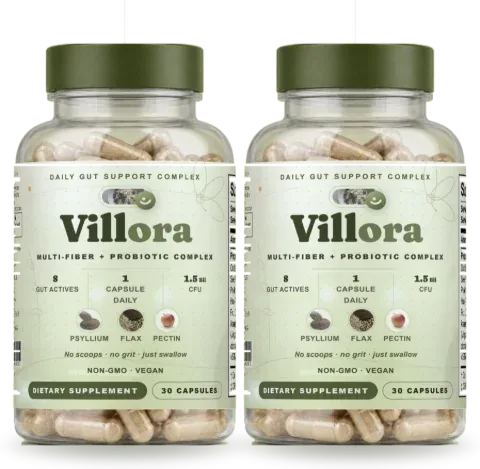
2 bottles
$69per bottle
- $138 total · 60 capsules
- $9.99 shipping
- $2.47 a day with shipping
- Good for trying the routine first
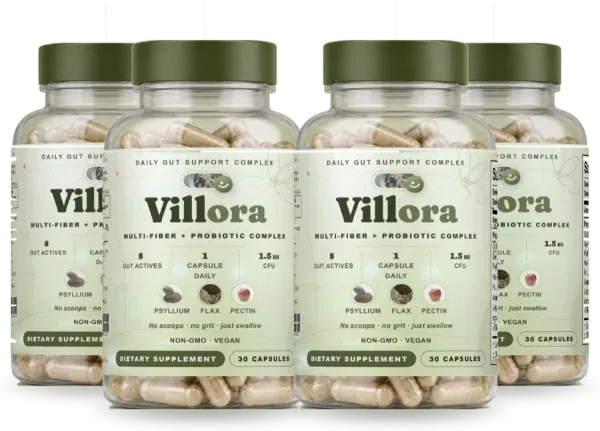
4 bottles
$59per bottle
- $236 total · 120 capsules
- Free US shipping
- about $1.97 a day
- Two digital guides included (sales page)
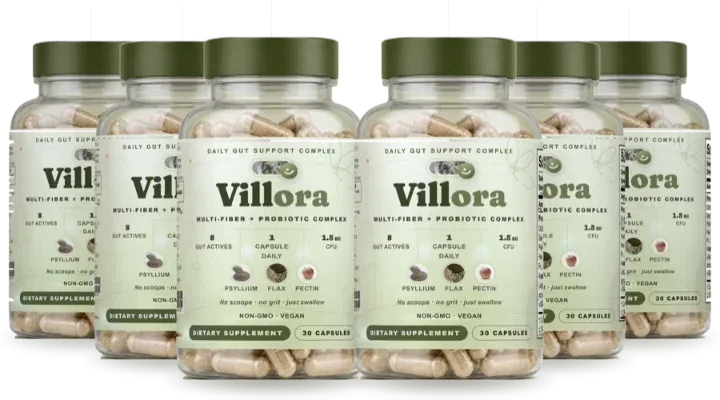
6 bottles
$49per bottle
- $294 total · 180 capsules
- Free US shipping
- about $1.63 a day
- Two digital guides included (sales page)
60-day money-back guarantee from the purchase date, per the sales page. Return the bottles, even empty, with tracking. Buyer pays return shipping. Questions: +1 (302) 200-3480 or [email protected].

Order links go to the official checkout through our checkout guide rules: check the address bar, the total and the shipping line before you pay. Tree-nut allergy? Do not order: the blend lists black walnut hull.
Questions people ask
Can I take Villora if I am allergic to almonds or cashews but not walnuts?
Not without your allergist's approval. Cross-reactivity among tree nuts is possible, so an allergy to one tree nut can mean a reaction to another.5 Ask before trying any product that lists walnut.
Is the black walnut in Villora only a trace amount?
It is a listed ingredient, not a trace. Black walnut hull is sixth of eight items in the 695 mg blend, and the exact amount is not disclosed.1 Consider Villora a product that contains tree nuts.
Is there a nut-free version of Villora?
We have not seen one. The only Villora label we reviewed lists black walnut hull, and the sales page says it contains tree nuts.1 People with a tree-nut allergy should choose a different product with their clinician's help.
Does Villora list walnut on the front of the bottle?
The front label shows psyllium, flax and pectin icons and does not feature a walnut warning.1 The walnut appears on the Supplement Facts panel. Always read the panel, not just the front.
Where do I report a reaction to Villora?
Report it to the FDA through MedWatch, which accepts reports from consumers and health professionals.8 Also tell the seller, with your order ID, at [email protected].
Sources for this page
- Villora bottle front label and Supplement Facts panel (photographed on this site)
- MedlinePlus — Food Allergy
- FDA — Dietary Supplement Labeling Guide
- FARE — Tree nut allergy
- Drugs.com — Black walnut (natural product monograph)
- FDA eCFR 21 CFR 201.319 — water-soluble gums warning
- FDA — Food Allergies
- FDA — MedWatch adverse event reporting
- Villora official sales page, read 23 November 2026 (prices, shipping and guarantee terms)