
What is black walnut hull?
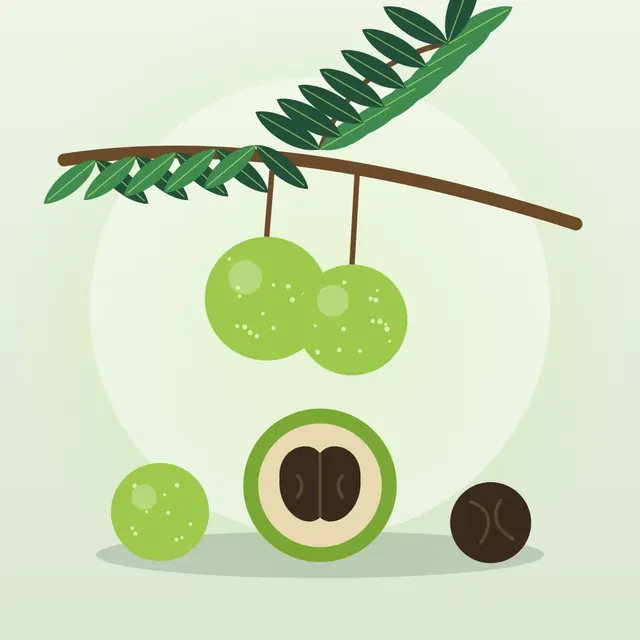
Black walnut hull is the green-to-black outer covering that surrounds the shell of the black walnut, the nut of the Juglans nigra tree. It is not the nutmeat people eat. The Villora panel names "hull" as the plant part used.1
Black walnut trees are native to eastern North America. The hull is known for staining hands and cloth a deep brown, and natural-product references describe its long use as a dye and in folk remedies.2 In supplements, the hull is usually dried and ground into a powder, as it is in Villora.
Unlike the other plant items in the blend, black walnut hull is not a food fiber that people eat in meals. Oat bran, flax, apple, plum and konjac all have everyday food uses. The hull is a botanical, and it is the item on the panel with the most cautions attached.
Is black walnut hull a tree-nut allergen?
Yes. Black walnut is a tree nut, and the Villora sales page states that the product contains tree nuts.3 Tree nuts are one of the major food allergens named by the FDA, and food labels in the US must declare them.4
FARE notes that tree-nut allergy can cause severe reactions, including anaphylaxis, and that walnuts are among the tree nuts most often involved.5 Natural-product references also note that cross-reactivity among tree nuts is possible, so a person allergic to one tree nut may react to another.2
If you have a tree-nut or walnut allergy, do not take Villora. That includes people allergic to other tree nuts who have not been cleared by their allergist.
- Allergic to walnuts: do not take Villora.
- Allergic to any other tree nut: do not take it unless your allergist says it is safe for you.
- Never tested but had a reaction to nuts before: ask a doctor first.
- Buying for someone else: check their allergies before you order.
MedlinePlus explains that food allergy symptoms can range from mild to life-threatening and can appear quickly.6 Our Villora walnut allergy page covers label reading and cross-reactivity in more depth.
Where is black walnut hull on the Villora label?
Black walnut hull powder is sixth of eight, after konjac root and before plum powder.1 FDA labeling rules list the items in a proprietary blend in descending order of predominance by weight, so the hull weighs no more than any of the five items above it.7
| Label detail | What it says or allows |
|---|---|
| Printed name | Black Walnut Hull Powder (Juglans nigra) hull |
| Position in blend | 6 of 8 |
| Item above | Konjac Root Powder |
| Item below | Plum Powder |
| Blend total | 695 mg per capsule |
| Per-item amount | Not disclosed |
| Logical ceiling from the ranking | No more than about 115 mg, a sixth of 695 mg |
| Front-label icon | None |
| Tree-nut statement | On the sales page; the label images we saw show no separate allergen line |
The ceiling is a limit, not an estimate. Any amount of walnut matters to a person with a walnut allergy, so a small or unknown share gives no comfort. For the full panel, see our Villora label guide.
How do you spot walnut on a supplement label?
Look in two places: the ingredient names themselves and any "Contains" statement. Under US allergen labeling law, a major food allergen such as a tree nut must be named on the label, either within the ingredient list or in a separate "Contains" line, and the specific type of tree nut should be identified.4
On the Villora panel, the walnut appears in the ingredient line itself, as Black Walnut Hull Powder (Juglans nigra).1 The sales page adds a plain "contains tree nuts" note.3 If you check your own bottle and cannot find a walnut line, do not assume it has gone. Contact the seller and keep the bottle unopened until you have an answer.
- Read the full blend list, not only the front label. The front pictures psyllium, flax and pectin, not walnut.
- Look for the Latin name Juglans, which is the walnut genus.
- Look for a "Contains" line on the bottle or box.
- When in doubt, ask your allergist before taking the first capsule.
What is black walnut hull traditionally used for?
Natural-product references describe black walnut hull as a traditional dye and a folk remedy used for a range of complaints.2 Traditional use tells you how people have used a plant. It does not tell you that the plant works for those uses, or that it is safe for everyone.
Villora ads tell a "sweep, cleanse, repair" story about the blend, and black walnut hull is often placed in products that use language like this. That is ad wording. It is not printed on the Supplement Facts panel, and we do not present it as something the hull or Villora does.
How strong is the evidence for black walnut hull?
The evidence is weak. Natural-product references note that there is little clinical research on black walnut in people to support its traditional uses.2 We did not see any study on the finished Villora product either.
| Question | What we can say |
|---|---|
| Is it a tree nut? | Yes. Walnut is a tree nut and a major allergen. |
| Is it traditionally used? | Yes, as a dye and in folk remedies. |
| Is there strong clinical evidence for its uses? | No. Human research is limited. |
| Is there a study on Villora? | None that we saw. |
| How much is in a capsule? | Not disclosed. At most about 115 mg by the ranking rule. |
| Is it advised in pregnancy? | Some references advise avoiding black walnut preparations in pregnancy. |
When evidence is thin, the honest position is to say so. We make no promise of any benefit from the black walnut hull in Villora. If the hull is the reason you are interested in the product, discuss that with your doctor, who can weigh it against your health history.
Is black walnut hull safe in pregnancy?
It is not advised without a doctor's approval. Some references advise avoiding black walnut preparations during pregnancy.2 If you are pregnant, trying to become pregnant or nursing, ask your doctor before taking Villora.
This caution is specific to the hull, but the general rule applies to the whole product. NCCIH advises talking to a health care provider before using any supplement in pregnancy or while nursing, because many supplements have not been tested in those groups.8
Who else should check before taking it?
Beyond allergy and pregnancy, ask a doctor or pharmacist first if you take any medicine, have trouble swallowing, a past bowel blockage or narrowing, a digestive condition, a weakened immune system or a serious illness. The product is for adults 18 and over.
- Check your allergies first. Any tree-nut or walnut allergy rules it out.
- Ask your doctor if you are pregnant or nursing.
- Ask your pharmacist about spacing it from medicines, because the fiber in the blend can change how some medicines are absorbed.
- If you go ahead, follow the label: one capsule daily with a full glass of water, with breakfast or another meal you never skip.3
- Stop and get urgent help for chest pain, vomiting, trouble swallowing or breathing, or signs of an allergic reaction such as swelling of the lips, face or throat.
Fiber and probiotics in general can cause temporary gas, bloating or stomach discomfort, especially at first. If you have a reaction after taking any supplement, you or your doctor can report it to the FDA through MedWatch.9 See is Villora safe for safety notes across every ingredient.
What is unknown about the black walnut hull in Villora?
The amount, the source and the processing are all unknown from the label. The panel gives name, Latin name, plant part and rank only.1
- Black walnut hull weight in milligrams.
- Where the walnuts were grown and how the hull was dried and ground.
- Whether the product is made where other tree nuts are handled.
- Any study of the finished capsule.
To see the hull alongside the other seven items, read Villora ingredients. If you have no nut allergy, have checked with your doctor where needed and still want to try it, you can check the current Villora offer.
Ready to order? Compare the three Villora packs
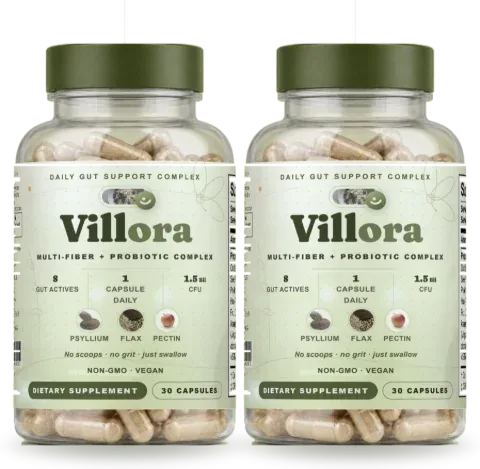
2 bottles
$69per bottle
- $138 total · 60 capsules
- $9.99 shipping
- $2.47 a day with shipping
- Good for trying the routine first
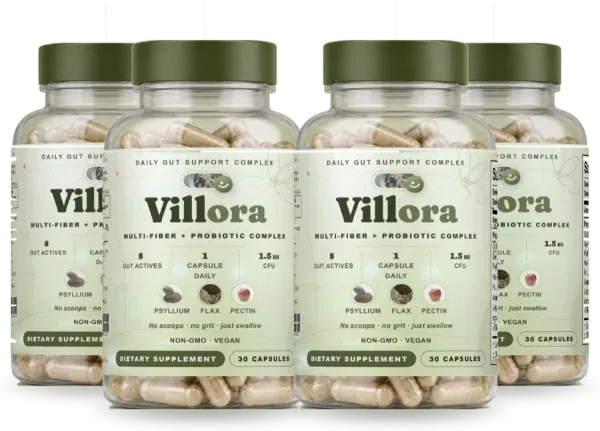
4 bottles
$59per bottle
- $236 total · 120 capsules
- Free US shipping
- about $1.97 a day
- Two digital guides included (sales page)
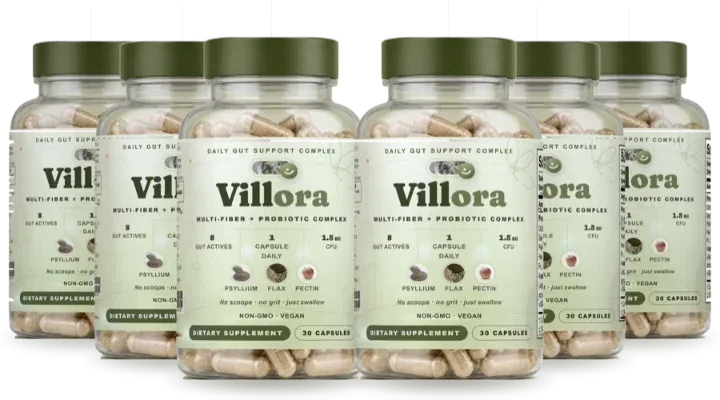
6 bottles
$49per bottle
- $294 total · 180 capsules
- Free US shipping
- about $1.63 a day
- Two digital guides included (sales page)

60-day money-back guarantee from the purchase date, per the sales page. Return the bottles, even empty, with tracking. Buyer pays return shipping. Questions: +1 (302) 200-3480 or [email protected].

Order links go to the official checkout through our checkout guide rules: check the address bar, the total and the shipping line before you pay. Tree-nut allergy? Do not order: the blend lists black walnut hull.
Questions people ask
Does Villora contain walnut?
Yes. Black walnut hull powder is sixth in the blend, and the sales page says the product contains tree nuts.3 People with a tree-nut or walnut allergy should not take it.
Is the black walnut hull in Villora the same as eating walnuts?
No. The hull is the outer covering around the shell, not the nutmeat. It still comes from a tree nut, so the allergy warning applies in full.
How much black walnut hull is in a Villora capsule?
The label does not say. The hull is sixth in a 695 mg blend, so by the ranking rule it is no more than about 115 mg.7 For anyone with a walnut allergy, any amount matters.
Can I take Villora's black walnut hull while pregnant?
Ask your doctor first. Some references advise avoiding black walnut preparations in pregnancy.2
Is there good evidence for black walnut hull?
No. Natural-product references describe traditional use but limited clinical research in people.2 We saw no study on Villora itself.
Sources for this page
- Villora bottle front label and Supplement Facts panel (photographed on this site)
- Drugs.com — Black walnut (natural product monograph)
- Villora official sales page, read 23 November 2026 (prices, shipping and guarantee terms)
- FDA — Food Allergies
- FARE — Tree nut allergy
- MedlinePlus — Food Allergy
- FDA — Dietary Supplement Labeling Guide
- NCCIH — Using Dietary Supplements Wisely
- FDA — MedWatch adverse event reporting