
What is konjac root?
Konjac is a plant whose underground corm, the swollen base of the stem that is often called a root, is dried and ground into flour or powder. The Villora panel names the part used as "corm", which is the botanically accurate term.1 Labels for botanical ingredients are expected to state the plant part, so this line does what the rules ask.2
In parts of East Asia, konjac flour has long been used to make firm jellies and translucent noodles. The main fiber in konjac is glucomannan. In supplements, konjac is usually sold for that fiber, either as konjac root powder, as on the Villora label, or as purified glucomannan.
Konjac root powder and purified glucomannan are not the same thing. A root powder carries glucomannan plus other parts of the corm. A purified product is mostly the fiber. The Villora label says root powder, and it does not say how much glucomannan the powder carries.

What is glucomannan and why does it swell?
Glucomannan is a soluble fiber, and like other soluble fibers it takes up water and forms a thick gel.3 Glucomannan is known for absorbing a large amount of water compared with its own weight, which is what makes konjac foods firm and springy.
In the body, soluble fiber turns into a gel-like material during digestion.3 That is a normal property of food fiber. The risk comes before the fiber reaches the stomach. A gel-forming fiber that starts to swell in the throat or esophagus can stick there, especially if it was swallowed with too little liquid.
| Villora item | Position | Named in the US gums warning rule? |
|---|---|---|
| Psyllium Husk Powder | 3 of 8 | Yes, as psyllium |
| Apple Pectin Powder | 4 of 8 | Not named |
| Konjac Root Powder | 5 of 8 | Its main fiber, glucomannan, is named |
Two of the three gel-forming items in Villora are tied to fibers that US rules single out.4 We explain the other two on our psyllium husk and apple pectin pages.
Inside a closed capsule the powder is dry. Swelling starts once the shell opens and the powder meets liquid. A full glass of water helps carry the capsule down before that happens.
What does the US choking warning say?
The rule, 21 CFR 201.319, requires over-the-counter drug products made with water-soluble gums, including glucomannan and psyllium, to carry a choking warning.4 In plain terms, the warning says the product can swell and block the throat or esophagus if taken without enough liquid, and it tells people what to do if that happens.
- Take the product with a full glass of water or other fluid.
- Taking it without enough liquid may cause it to swell and block the throat or esophagus, and may cause choking.
- Do not take it if you have difficulty swallowing.
- Get medical help right away for chest pain, vomiting, or difficulty swallowing or breathing after taking it.
Villora is sold as a dietary supplement, not as an over-the-counter drug, so that exact rule is not written for it. The physical risk does not change with the category, though. We apply the same warning to Villora, and so should you.
Take each Villora capsule with a full glass of water. Stop and get urgent help for chest pain, vomiting, or trouble swallowing or breathing after taking it.
Where is konjac on the Villora label?
Konjac root powder is fifth of eight, after oat bran, flax seed, psyllium husk and apple pectin.1 FDA labeling rules list blend ingredients in descending order of predominance by weight, so konjac weighs no more than any of the four items above it.2
| Label detail | What it says or allows |
|---|---|
| Printed name | Konjac Root Powder (Amorphophallus konjac) corm |
| Position in blend | 5 of 8 |
| Item above | Apple Pectin Powder |
| Item below | Black Walnut Hull Powder |
| Blend total | 695 mg per capsule |
| Per-item amount | Not disclosed |
| Logical ceiling from the ranking | No more than 139 mg, a fifth of 695 mg |
| Glucomannan content | Not stated |
The ceiling is a limit, not an estimate. It would only be reached if the top five items weighed exactly the same, and the real amount could be much lower. A small amount does not remove the need for water, because the capsule also holds psyllium and pectin. For the whole panel, read our Villora label guide.
Konjac also has no icon on the front label. The front pictures psyllium, flax and pectin only.1 So a buyer who reads only the front would not know the capsule contains konjac at all. This is one more reason to read the back panel before you buy, and to read it again when the bottle arrives, in case the label has changed.
How should you take a capsule that contains konjac?
Follow the label: one capsule daily, swallowed with a full glass of water. The sales page suggests breakfast, or another meal you never skip, at about the same time each day.5
- Sit or stand upright and have a full glass of water ready before you open the bottle.
- Swallow one capsule and drink the full glass, not a sip.
- Take it with the same meal each day.
- Never take more than the label says to make up for a missed day.
- If you take any medicine, ask your pharmacist how far apart to space them, because fiber can change how some medicines are absorbed.
- Do not take it at all if you have trouble swallowing.
If a capsule ever feels stuck, or you get chest pain, vomiting, or trouble swallowing or breathing afterwards, stop and get urgent medical help. After the event, you or your doctor can report it to the FDA through MedWatch.6
Who should ask a doctor before taking konjac in a blend?
Anyone with a swallowing problem, a past bowel blockage or narrowing, or a digestive condition should talk to a doctor first. That advice fits konjac in particular, because it is one of the strongest-swelling fibers on the panel.
- Trouble swallowing, now or in the past.
- A past bowel blockage, narrowing or bowel surgery.
- A digestive condition of any kind.
- Pregnant or nursing. Some references also advise avoiding black walnut preparations in pregnancy.7
- Taking any medicine, including daily pills.
- A weakened immune system or a serious illness, since the capsule also holds a probiotic.8
- A tree-nut or walnut allergy. Do not take Villora, because it contains black walnut hull.5
For a full list of who the product may and may not fit, see who should take Villora.
What does general research on konjac cover, and what does it not?
Research on konjac and glucomannan looks at the fiber in general, usually at gram-level doses of purified glucomannan. That is not research on Villora, and we did not see any study on the finished product.
A capsule with a sub-gram blend of eight items, and an unknown share of konjac root powder, is a very different thing from the amounts used in studies of the purified fiber. We make no promise of any result from the konjac in Villora. Fiber in general is part of a normal diet, and most of it should come from food such as whole grains, fruit, vegetables and beans.9
The ads describe Villora with a "sweep, cleanse, repair" story. That is ad language, not a label claim. Konjac in this capsule has not been shown to do any of those things.
What side effects and unknowns go with konjac?
Fiber in general can cause temporary gas, bloating or stomach discomfort, especially at first, and MedlinePlus suggests adding fiber slowly with enough fluid.10 Choking is the serious risk tied to swelling fibers, which is why the water rule comes first on this page.
Several details about the konjac in Villora are not stated on the label:1
- The konjac weight in milligrams.
- How much glucomannan the root powder carries.
- How the root powder was dried and ground.
- Any study of the finished capsule.
See Villora side effects for the full list across all eight items, or Villora ingredients for the whole formula. If you have read the label and checked with your doctor where needed, you can check the current Villora offer.
Ready to order? Compare the three Villora packs
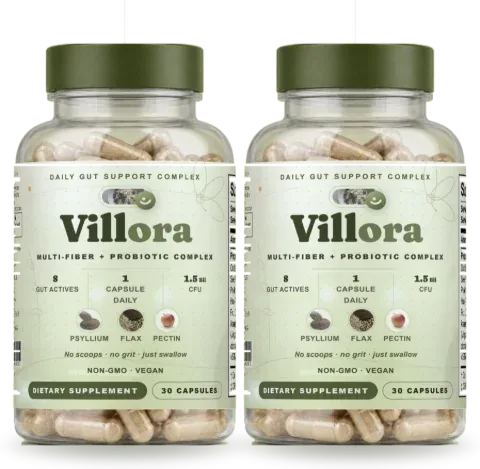
2 bottles
$69per bottle
- $138 total · 60 capsules
- $9.99 shipping
- $2.47 a day with shipping
- Good for trying the routine first
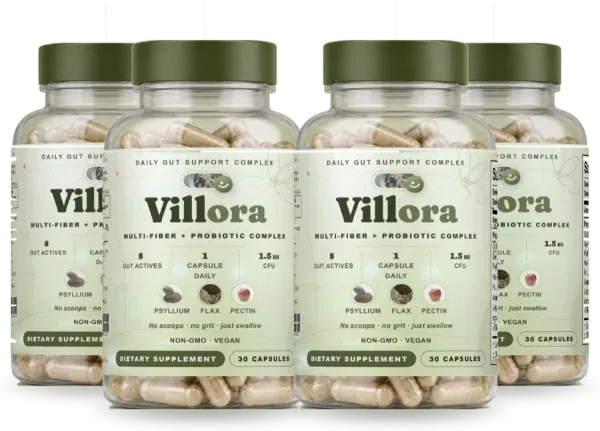
4 bottles
$59per bottle
- $236 total · 120 capsules
- Free US shipping
- about $1.97 a day
- Two digital guides included (sales page)
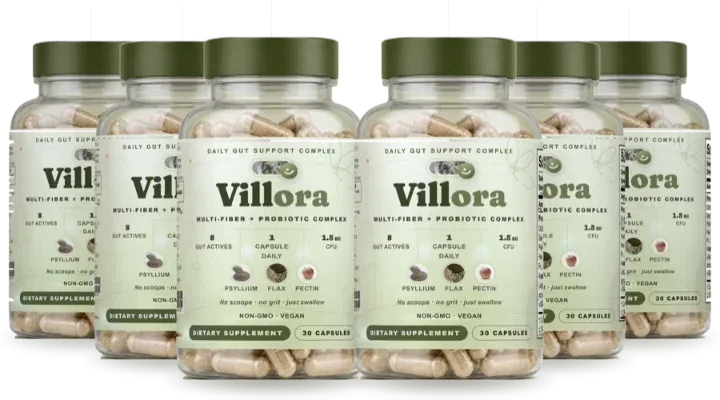
6 bottles
$49per bottle
- $294 total · 180 capsules
- Free US shipping
- about $1.63 a day
- Two digital guides included (sales page)
60-day money-back guarantee from the purchase date, per the sales page. Return the bottles, even empty, with tracking. Buyer pays return shipping. Questions: +1 (302) 200-3480 or [email protected].

Order links go to the official checkout through our checkout guide rules: check the address bar, the total and the shipping line before you pay. Tree-nut allergy? Do not order: the blend lists black walnut hull.
Questions people ask
Is konjac root in Villora the same as glucomannan?
Not exactly. The label lists konjac root powder, which contains glucomannan along with other parts of the corm.1 It does not say how much glucomannan is in the powder.
How much konjac is in each Villora capsule?
The amount is not disclosed. Konjac is fifth in a 695 mg blend, so by the ranking rule it is no more than 139 mg, and it may be far less.2
Why is there a choking concern with the konjac in Villora?
Glucomannan, the main fiber in konjac, swells with liquid, and US rules require a choking warning on drug products made with it.4 Take each capsule with a full glass of water.
Should I take Villora if I have trouble swallowing pills?
No, not without your doctor's advice. The capsule contains konjac, psyllium and pectin, which swell with water, and anyone with trouble swallowing should not take products like this on their own.
What does "corm" mean on the Villora konjac line?
A corm is the swollen underground base of the plant's stem, often called the root. The label names it because botanical ingredients should state the plant part used.2
Sources for this page
- Villora bottle front label and Supplement Facts panel (photographed on this site)
- FDA — Dietary Supplement Labeling Guide
- MedlinePlus — Fiber (encyclopedia)
- FDA eCFR 21 CFR 201.319 — water-soluble gums warning
- Villora official sales page, read 23 November 2026 (prices, shipping and guarantee terms)
- FDA — MedWatch adverse event reporting
- Drugs.com — Black walnut (natural product monograph)
- NCCIH — Probiotics: What You Need To Know
- Harvard T.H. Chan School of Public Health — The Nutrition Source: Fiber
- MedlinePlus — Dietary Fiber