
What is flax seed?
Flax seed is the small brown or golden seed of the flax plant, Linum usitatissimum, eaten whole, ground, or pressed for its oil. NCCIH explains that flaxseed contains soluble fiber and alpha-linolenic acid, and that flaxseed oil, unlike the ground seed, does not carry the fiber.1
Villora uses flax seed powder, which means ground seed rather than oil.2 Ground seed keeps the fiber along with the oil, protein and other natural parts of the seed. So flax seed powder is a whole-food powder. Only part of its weight is fiber.
In kitchens, ground flaxseed is stirred into cereal, yogurt or baking, usually by the tablespoon. Seeds in general appear on lists of fiber-rich foods, alongside whole grains, beans, fruit and vegetables.3
The panel names "seed" as the plant part used, which matches the powder form. Botanical ingredients on supplement labels are expected to state the part of the plant used, so this line is doing what the rules ask.4 It tells you the form. It does not tell you the amount, the variety of flax or how finely it was ground.

What does the NCCIH summary on flaxseed say?
NCCIH, part of the National Institutes of Health, summarizes flaxseed as a food and supplement that has been studied for several health topics, with results it describes as mixed or limited for many of them.1 It is a general summary of the ingredient, not a review of any product.
- Flaxseed contains soluble fiber and alpha-linolenic acid.1
- Flaxseed oil does not contain the fiber found in the seed.1
- Flaxseed should be taken with plenty of water, as with any fiber.1
- The fiber in flaxseed may reduce how well the body absorbs medicines taken by mouth.1
- Flaxseed in limited amounts is described as generally well tolerated, though it can cause digestive effects such as diarrhea.1
Those points describe flaxseed in general, often at food-sized amounts. They do not tell you what a sub-gram share of flax in a mixed capsule will do. We did not see any study on the finished Villora product, and we make no promise of any result.
Where is flax seed on the Villora label?
Flax seed powder is the second of eight items in the blend. FDA labeling rules list the ingredients inside a proprietary blend in descending order of predominance by weight, so flax seed weighs no more than oat bran and at least as much as psyllium.4
| Label detail | What it says or allows |
|---|---|
| Printed name | Flax Seed Powder (Linum usitatissimum) seed |
| Position in blend | 2 of 8 |
| Item above | Oat Bran Powder, which weighs the same or more |
| Item below | Psyllium Husk Powder, which weighs the same or less |
| Blend total | 695 mg per capsule |
| Per-item amount | Not disclosed |
| Logical ceiling from the ranking | No more than about 347 mg, half of 695 mg |
| Front-label icon | Yes, flax is pictured on the front |
The ceiling is a limit, not an estimate. It assumes oat bran and flax seed weigh exactly the same. If oat bran is heavier, the flax share is smaller. Read the figure as "no more than", never as "about this much". For the full panel, see our Villora label guide.
How does capsule flax compare with flax in food?
Capsule flax is a much smaller amount than flax eaten as food. A spoonful of ground flaxseed weighs several grams. The whole Villora blend, eight items together, weighs 695 mg.2
| Measure | Figure | Basis |
|---|---|---|
| Whole blend per capsule | 695 mg | Label |
| Flax share | Not disclosed; at most about 347 mg | Label order |
| Daily fiber goal at 2,000 calories | 28 g | 14 g per 1,000 calories |
| Fiber share of flax powder | Only part of its weight | Whole-seed powder |
The Dietary Guidelines set a fiber goal of 14 g per 1,000 calories.5 Against that, the flax in one capsule is a minor addition. If flaxseed itself is what you want, ground flax with meals gives you a known, larger amount. Our Villora vs psyllium powder page looks at capsule blends against plain fiber in more detail.
How does flax fit with the other items in the blend?
Flax is one of three whole-food powders in Villora, next to oat bran and plum powder. The other fiber items are more concentrated: psyllium husk, apple pectin and konjac root are mainly soluble, gel-forming fibers.2
This matters for how you read the formula. A whole-seed powder like flax brings fiber plus the seed's natural oil and protein, so a given weight of flax carries less fiber than the same weight of psyllium husk. Soluble fiber in general takes up water and forms a gel.6 That is the property behind the full-glass-of-water rule.
- Whole-food powders: oat bran (1st), flax seed (2nd), plum (7th).
- Gel-forming fibers: psyllium husk (3rd), apple pectin (4th), konjac root (5th).
- Botanical hull: black walnut (6th).
- Probiotic: Lactobacillus acidophilus (8th), 1.5 billion CFU at manufacture.
Because the label hides each item's weight, nobody can say how the fiber in the capsule splits between these groups. The ranking is the only clue, and it is a clue about weight, not fiber.
What safety notes apply to flax in Villora?
The main flax notes are water and medicines. NCCIH says flaxseed should be taken with plenty of water and that its fiber may affect how medicines taken by mouth are absorbed.1 Both points fit the wider Villora directions.
- Follow the label: one capsule daily.
- Take it with a full glass of water. The blend also has psyllium, pectin and konjac, which swell with liquid.
- Take it with breakfast or another meal you never skip, at about the same time each day, as the sales page suggests.7
- If you take any medicine, ask your pharmacist how far apart to space them.
- Stop and get urgent help for chest pain, vomiting, or trouble swallowing or breathing after taking it.
Ask a doctor or pharmacist first if you are pregnant or nursing, have trouble swallowing, a past bowel blockage or narrowing, a digestive condition, a weakened immune system or a serious illness. Fiber and probiotics in general can cause temporary gas, bloating or stomach discomfort, especially at first.
Villora also contains black walnut hull. Anyone with a tree-nut or walnut allergy should not take it, whatever they think of the flax.
Is flax seed an allergy concern in Villora?
Flax is not one of the major food allergens the FDA lists, but any food can cause a reaction in some people, so check with your doctor if you have reacted to seeds before.8 The allergen that matters most in Villora is the tree nut, black walnut.
The sales page says the product contains tree nuts, and black walnut hull is printed on the panel.7 MedlinePlus notes that food allergy reactions can range from mild to severe.9 For the full nut question, see Villora walnut allergy.
If you have had any reaction to seeds, grains or nuts before, bring the full ingredient list to your doctor. It is easier to check eight names on paper than to guess from a front label that pictures only three of them.
Why does the front label show flax?
We do not know the reason. The front pictures flax, psyllium and pectin, and flax is the only one of the three that is also near the top of the panel.2 Oat bran, the first item, is not pictured.
Front-label pictures are design. The Supplement Facts panel is the ranked, regulated list. When the two seem to tell different stories, read the panel. The ads go further and tell a "sweep, cleanse, repair" story about the blend. That is marketing wording, not a claim on the label, and not something flax or Villora has been shown to do.
What is unknown about the flax in Villora?
The flax amount is the main unknown, and several other details are not stated either. The label gives name, Latin name, plant part and rank only.2
- Flax weight in milligrams.
- Whether the seed is brown or golden, or how it was ground.
- How much fiber or alpha-linolenic acid the flax share carries.
- Any study of the finished product.
To see flax alongside the other seven items, read Villora ingredients, or go back to oat bran, the item above it. If the label fits you and you have asked your doctor where needed, you can check the current Villora offer.
Ready to order? Compare the three Villora packs
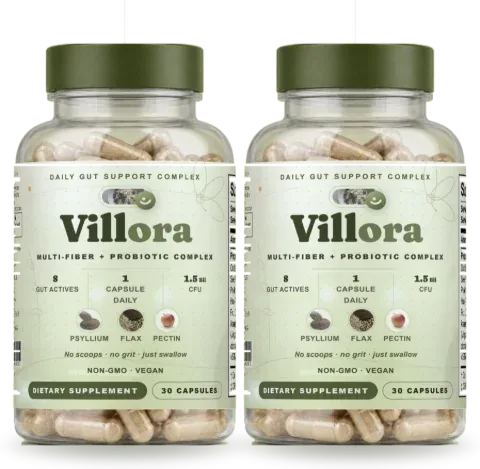
2 bottles
$69per bottle
- $138 total · 60 capsules
- $9.99 shipping
- $2.47 a day with shipping
- Good for trying the routine first
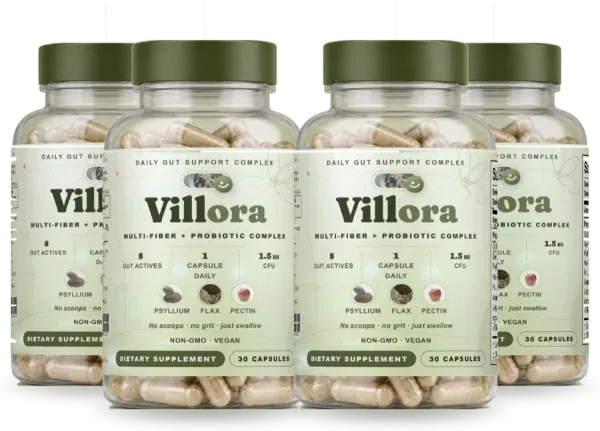
4 bottles
$59per bottle
- $236 total · 120 capsules
- Free US shipping
- about $1.97 a day
- Two digital guides included (sales page)
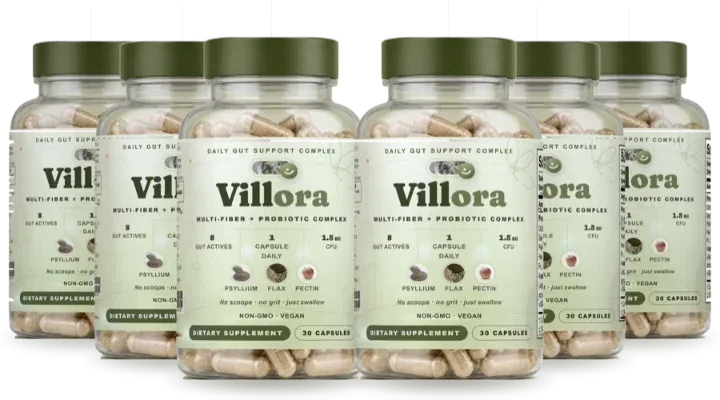
6 bottles
$49per bottle
- $294 total · 180 capsules
- Free US shipping
- about $1.63 a day
- Two digital guides included (sales page)

60-day money-back guarantee from the purchase date, per the sales page. Return the bottles, even empty, with tracking. Buyer pays return shipping. Questions: +1 (302) 200-3480 or [email protected].

Order links go to the official checkout through our checkout guide rules: check the address bar, the total and the shipping line before you pay. Tree-nut allergy? Do not order: the blend lists black walnut hull.
Questions people ask
Is the flax in Villora ground seed or flaxseed oil?
How much flax seed is in each Villora capsule?
The label does not say. Flax is second in a 695 mg blend, so it is no more than about 347 mg by the ranking rule, and the real amount may be lower.
Can the flax in Villora interact with my pills?
It could affect absorption. NCCIH says flaxseed fiber may reduce how well medicines taken by mouth are absorbed.1 Ask your pharmacist how to space them.
Does Villora contain omega-3 from flax?
Flaxseed naturally contains alpha-linolenic acid, an omega-3.1 The Villora label gives no omega-3 figure, and the flax amount is not disclosed, so the amount per capsule is unknown.
Sources for this page
- NCCIH — Flaxseed and Flaxseed Oil
- Villora bottle front label and Supplement Facts panel (photographed on this site)
- MedlinePlus — High-fiber foods
- FDA — Dietary Supplement Labeling Guide
- Dietary Guidelines for Americans
- MedlinePlus — Fiber (encyclopedia)
- Villora official sales page, read 23 November 2026 (prices, shipping and guarantee terms)
- FDA — Food Allergies
- MedlinePlus — Food Allergy